BSBI WEBSITE
RESEARCH
Define users’ motivations, needs and frustrations when enquiring about courses on the website.
Understand what makes a student experience satisfying.
Understand industry standards and what features/services/offerings give BSBI a competitive edge in Berlin, Germany.
Identify areas of improvement for the current website.
-
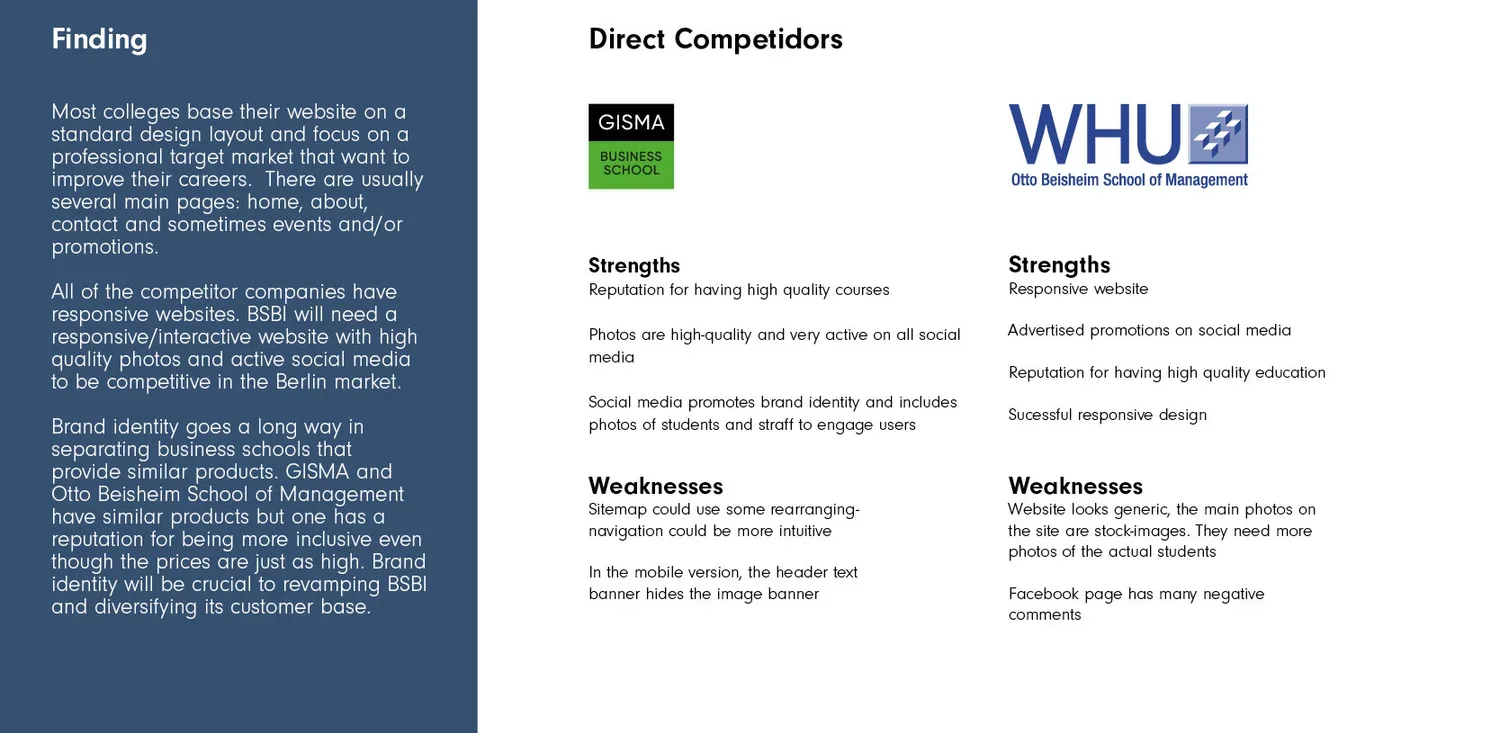
Working from my secondary research, I analysed some of BSBI’s competitors in the education industry.
I uncovered the strengths and weaknesses of the business's direct competitors GISMA and Otto Beisheim School of Management.
-
First, I conducted secondary research to familiarise myself with the national and local business colleges. I collected information from articles and case studies on trends, challenges and areas for growth to identify industry standards and user expectations.
-
Empathising with the target audience is a crucial step in the design thinking process. Therefore, it was essential to go out in the field and interact with real customers. I spent a day at BSBI chatting with students about their motivations, needs and frustrations while studying whilst also gathering information on how interactive they found the website.
Research assumptions:
Customers expect enquiry options on a college website.
Customers care about the values of the college.
Affordability and quality are the most important factors for students when choosing where to develop their careers.
Customers choose BSBI for its affordability and its base in Berlin.
Clustering interview responses allowed me to discover trends and patterns from which insights could be constructed. Through this process I identified several user needs:
Customers need to know that BSBI sells high quality products.
Customers need engagement with the company and its employees.
Customers need to see the unique identity and brand of the company.
Customers need to know they’ll find what they’re looking for on the BSBI website.
-
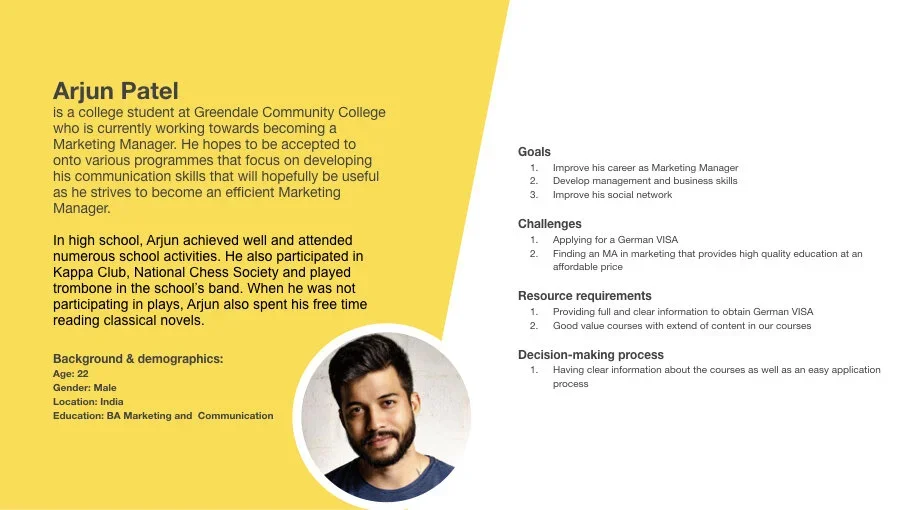
Next, I used all of the qualitative data I gathered during the research process to create Arjun, my persona. Arjun spent his childhood living in many countries and cultivated a passion for marketing. He seeks to find the perfect MA to improve his career as a Marketing Director.
DEFINE & IDEATE
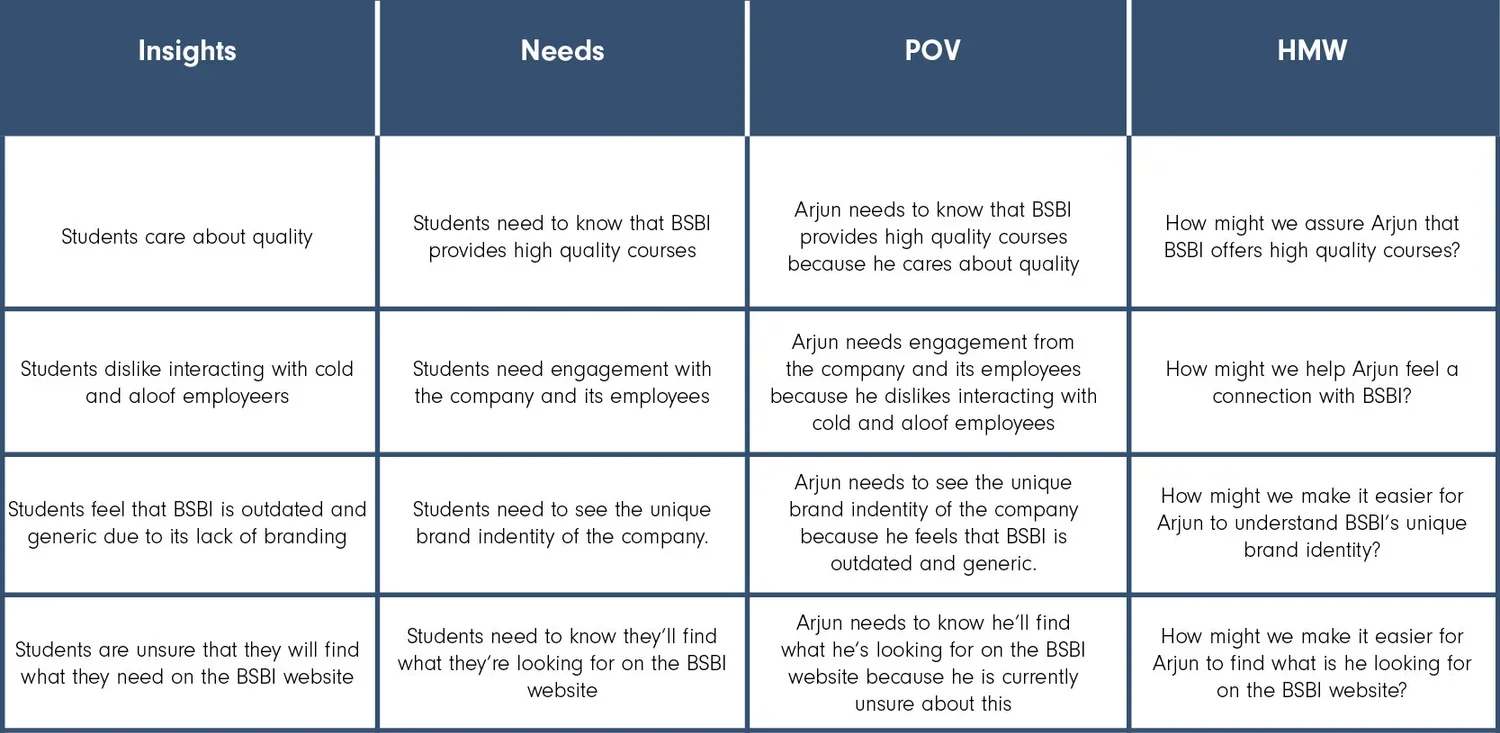
After wrapping up primary research, I dug deeper into the insights I had generated. First, I restructured my findings from the POV statements into an actionable problem statement that defines the design challenge. Next, I restructured those POV statements into ‘how might we’ questions that would generate solution-oriented brainstorming.
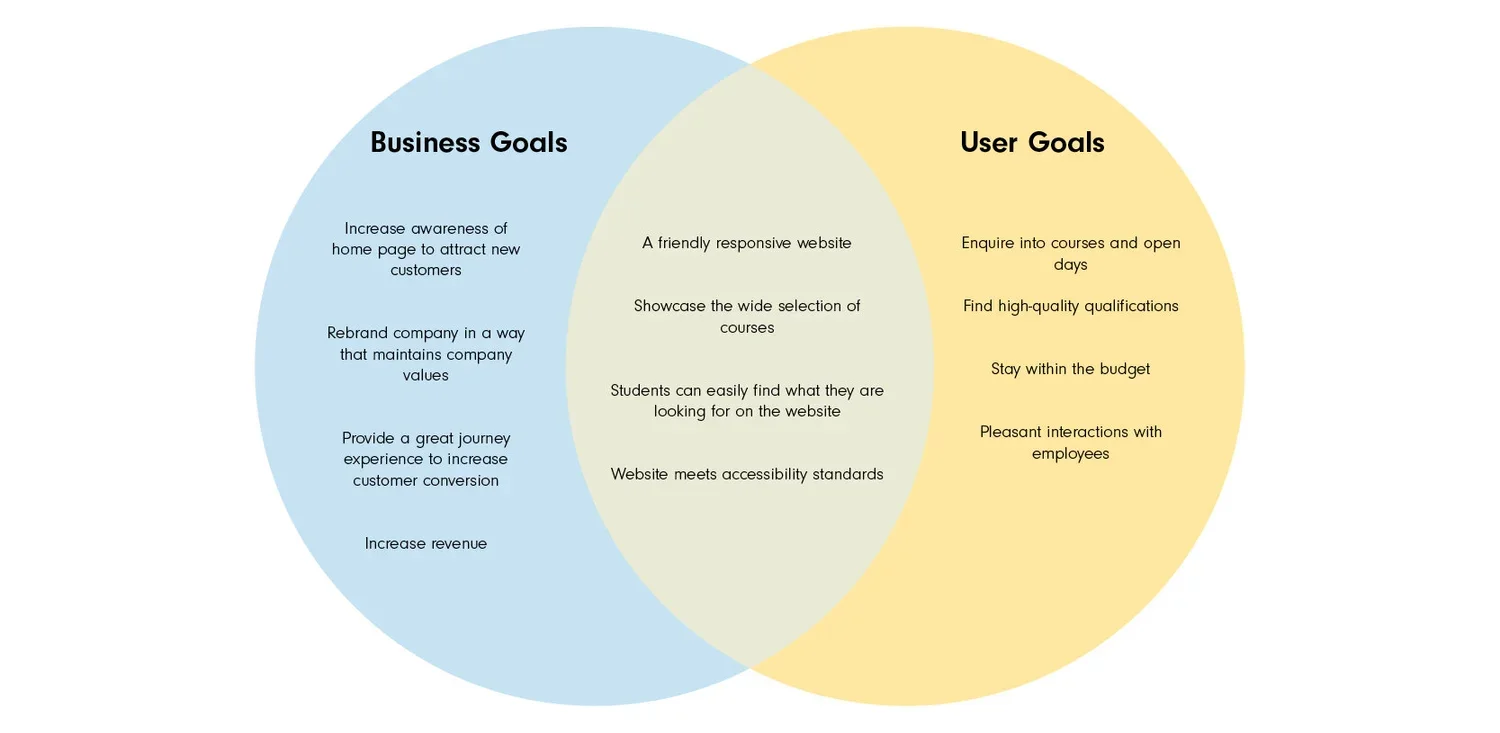
Now that I had empathised with the target users and identified their needs, I needed to define the solution. I reflected on the business goals, user goals and technical considerations to find a happy medium for all stakeholders. Once I had identified common areas, I could decide what product features were necessary for the prototype.
INFORMATION ARCHITECTURE
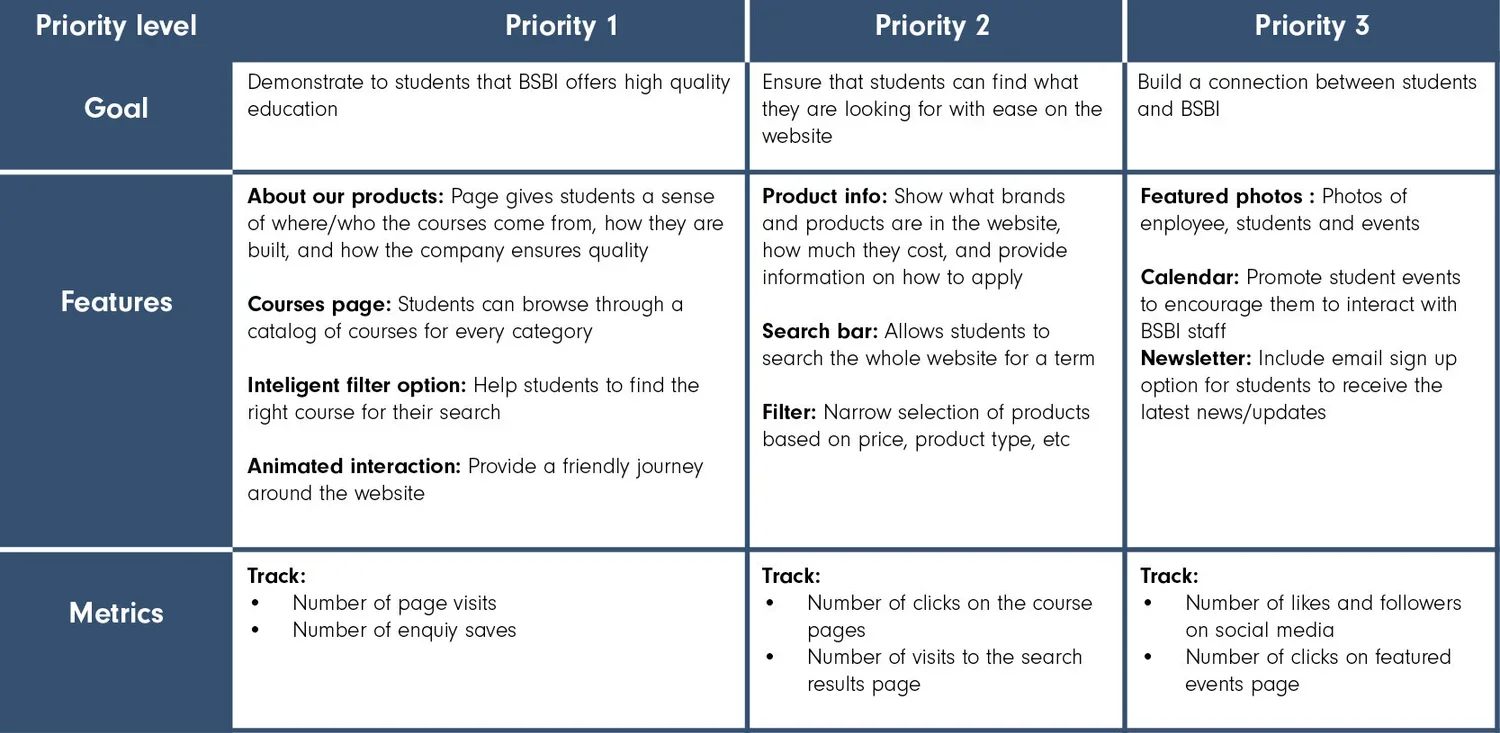
I created a high-level list of site features to further define and guide the vision for the product. Prioritising the features with supporting research created a clear order of execution.
Interaction Design
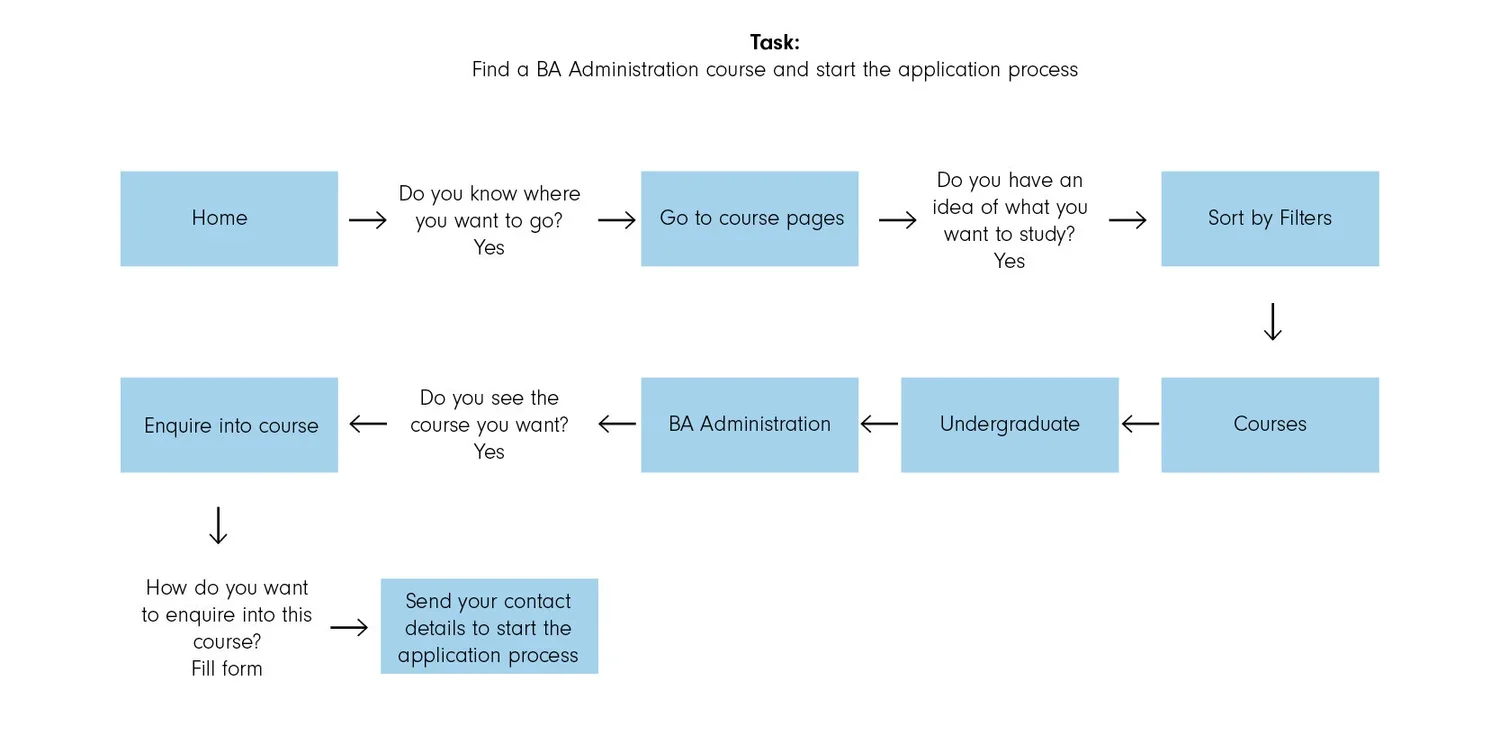
I completed a task flow and user flow to imagine the ways a user might navigate through the site to achieve their goals. These tools allowed me to ensure that the information was organised in a way that is intuitive to the user.
TEST
-
I created a low-fidelity prototype of the desktop site in XD. I created a UI requirements document to outline all of the features and elements I wanted to incorporate into the design.
-
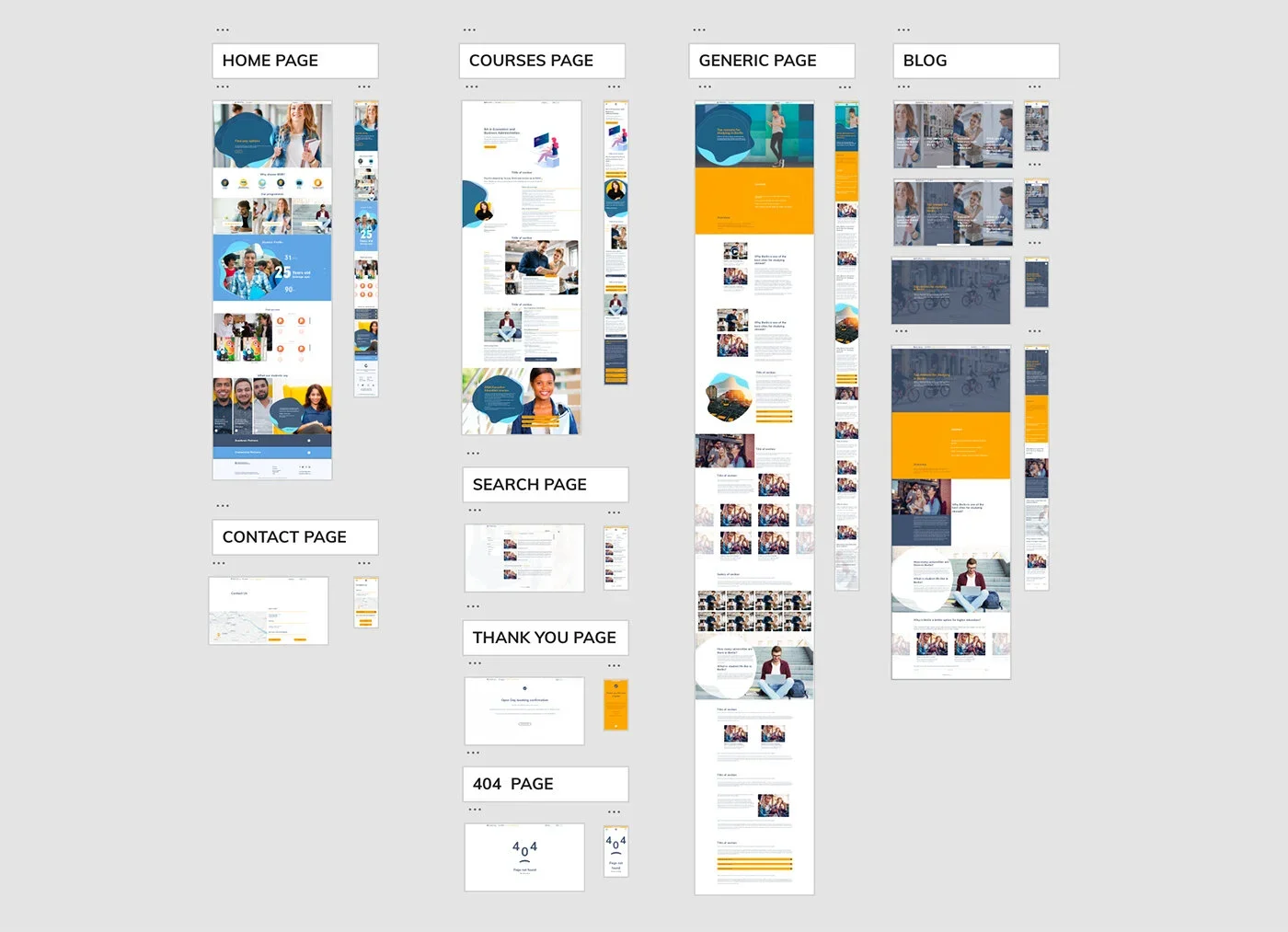
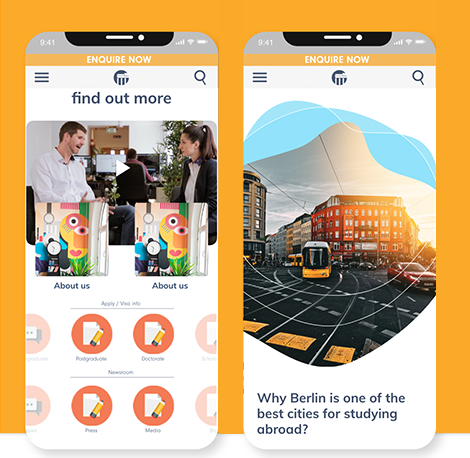
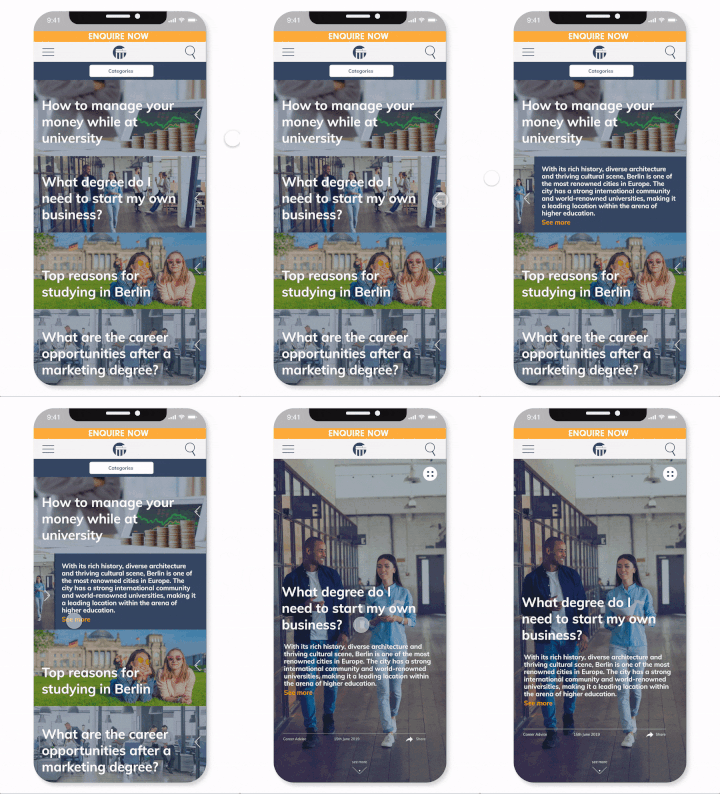
At this point in the design process, I needed to think about how I wanted the site to look on different screen sizes. It was essential that the website could be presented as well on a mobile device as it could when in desktop size. I created responsive wireframes for BSBI’s key pages and began to flesh them out.